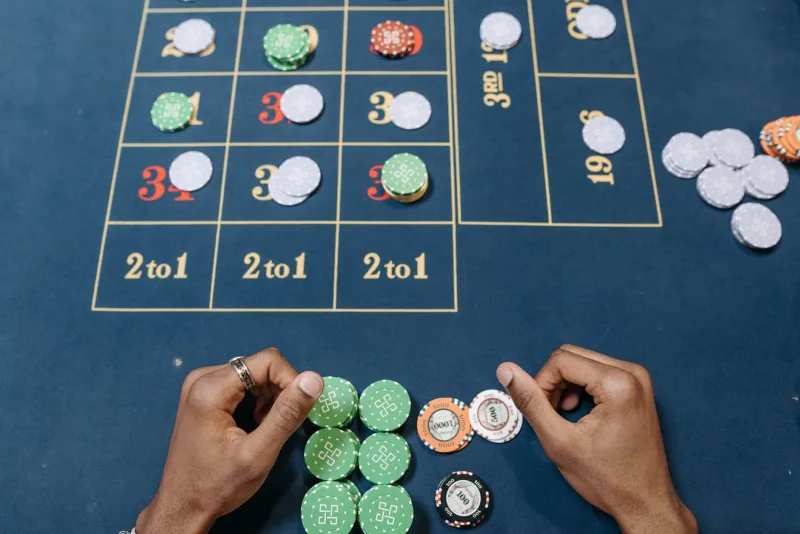
Hot Streak, Cold Logic: How Winning Big in Crypto Gaming Quietly Destroys Your Strategy

There's a specific kind of danger that nobody warns you about when you first start crypto gaming. It doesn't come from a cold losing streak or a bad beat on a high-stakes hand. It sneaks up on you when everything is going right — when the ETH is stacking, the wins are rolling in, and your gut starts whispering that maybe, just maybe, you've finally cracked the code.
That whisper? It's the most expensive sound in crypto gaming.
The Illusion of Mastery After a Win Streak
Behavioral economists have a name for what happens to your brain after a string of wins: overconfidence bias. It's not unique to gambling or crypto — it shows up in stock trading, sports betting, poker, you name it. But in crypto gaming, where the stakes are denominated in volatile digital assets and the pace of play is often lightning-fast, the consequences hit harder and faster than almost anywhere else.
Here's the basic psychology: when you win repeatedly, your brain starts constructing a narrative. It's not random variance — it's skill. It's not a hot table — it's your table. You stop seeing luck as a factor and start attributing every W to your own genius. Researchers at the University of California found that even brief winning streaks caused study participants to dramatically overestimate their influence over random outcomes. The brain, wired for pattern recognition, manufactures a pattern where none exists.
In crypto gaming, that manufactured pattern is a bankroll killer.
Why the Post-Win Moment Is Your Most Vulnerable State
Most players assume the danger zone is after a loss — when frustration kicks in and you start chasing. And yeah, tilt is real. But the post-win vulnerability is sneakier because it feels like confidence, not desperation.
After a major win, a few things happen simultaneously:
Your risk threshold shifts. You're playing with "house money" — or at least that's how your brain frames it. The $400 in BTC you just won doesn't feel like real money the same way your initial deposit did. So you bet bigger. You loosen your rules. You stop consulting your strategy and start freestyling.
Your session length creeps up. Winners stay at the table. It's a well-documented behavioral pattern. You tell yourself you'll quit after one more hand, one more spin, one more round. But the dopamine hit from winning creates a feedback loop that makes stopping feel almost physically uncomfortable.
Your game selection gets reckless. Suddenly the games you've studied and understand feel too slow, too conservative. You migrate toward higher variance options — bigger jackpots, longer-odds bets — because your inflated confidence tells you you're due for another massive hit.
All three of these shifts happen quietly, often without you even noticing, and each one is quietly eroding the bankroll you just built.
The "Genius Trap" Is Real and It Has a Body Count
Let's be blunt: the crypto gaming world is full of players who had one spectacular week and convinced themselves they'd figured something out. They've got the Discord screenshots to prove it — massive wins, impressive multipliers, stacks of USDT. What those screenshots never show is what happened the following week, when they bet three times their normal size because they felt bulletproof.
This is the genius trap. You win big, you feel like a genius, you bet like a genius, and then the math — which was never actually on your side in the first place — reasserts itself with brutal efficiency.
The hard truth is that in most crypto gaming environments, the house edge doesn't care how hot your streak was. Provably fair algorithms don't have memory. The dice have no idea you just went 12-for-12. But you do, and that knowledge is actively working against you.
The Guardrails That Actually Work
Successful long-term crypto gamers aren't the ones who never go on hot streaks. They're the ones who've built systems specifically designed to protect them from those streaks.
The Win Cap Rule. Set a session profit target before you start — not after. When you hit it, you're done. Period. No exceptions, no "just one more." This sounds obvious but almost nobody does it consistently. Write the number down before your first bet. Treat it like a stop-loss order on a trade.
The Strategy Lockdown. Commit to your betting strategy in writing before you begin. If you're using flat betting, you flat bet all session — win or lose. Winning streaks are not permission slips to suddenly switch to martingale or start sizing up aggressively. Discipline applied only when you're losing isn't discipline, it's damage control.
The Cooldown Protocol. After any session where you win more than 30-40% of your starting bankroll, build in a mandatory break before your next session. Doesn't matter if it's an hour or a day — the point is to let the dopamine settle and re-engage your prefrontal cortex before you risk real money again. Hot streaks are emotionally intoxicating. Sobriety is a feature, not a weakness.
The Variance Journal. Keep a simple log of your sessions — game played, starting bankroll, ending bankroll, notable decisions. After a big win, go back and read it honestly. Was that win the result of smart play or favorable variance? Most of the time, if you're being real with yourself, the answer is some mix of both. That humility is your most valuable asset.
Separate Your Profits Immediately. The moment you hit a significant win, move a predetermined percentage — say, 50% — out of your gaming wallet and into cold storage or a separate account. You can't bet what you can't access. This one mechanical habit alone has saved more bankrolls than any strategy guide ever written.
Respecting the Run Without Being Owned by It
None of this means you shouldn't enjoy a hot streak. Winning is fun — that's a big part of why we're all here. The goal isn't to play scared or to drain the excitement out of the experience. The goal is to still be playing, and still be profitable, three months from now.
The players who last in crypto gaming are the ones who've learned to separate their emotional response to a win from their strategic response to it. They let themselves feel the high. They just don't let that high write their next bet.
At Yes8 Crypto Gaming, we're all about playing bold — but bold play and reckless play are completely different animals. Bold means calculated aggression with a plan. Reckless means letting your last win make your next decision.
Your winning streak is a reward. Don't let it become a trap.