Stop Fearing the Dip: How Crypto Volatility Can Actually Pad Your Gaming Bankroll
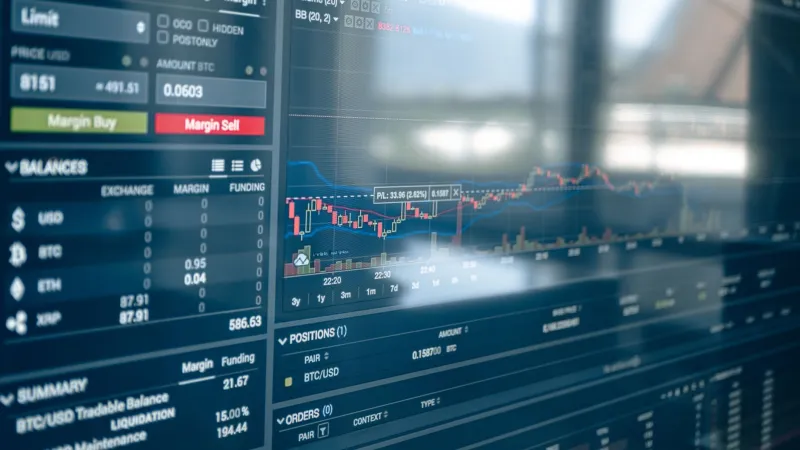
Ask any crypto gamer what their biggest frustration is, and you'll hear the same answer more often than not: volatility. You win 0.5 ETH on a great night, wake up the next morning, and the token you won it in has dropped 18% overnight. Suddenly that victory feels a lot smaller. Or worse—you load your gaming wallet during a peak, start losing, and by the time you're ready to cash out, your remaining balance has shrunk twice: once from losses, and again from the market moving against you.
It's a brutal double-hit that keeps a lot of US crypto gamers perpetually frustrated. But here's the thing—volatility isn't random noise you just have to suffer through. It has structure, it has cycles, and if you know how to read it, it hands you something most traditional online gamblers never get: a timing advantage.
Why Volatility Hits Crypto Gamers Differently Than Regular Investors
Traditional investors can afford to be passive about volatility. They buy, hold, and wait. Crypto gamers don't have that luxury. Your bankroll is active—it's moving in and out of games, converting between tokens, sitting in hot wallets where it's exposed to real-time price changes. You're not just a holder. You're a participant.
This creates a compounding risk that most players don't fully account for. When ETH drops 15% in 24 hours, a passive investor loses 15% on paper. A crypto gamer who has been converting winnings and topping up their wallet throughout that same period might be absorbing losses at multiple exchange points, paying gas fees during price spikes, and making emotionally reactive bets because their balance looks smaller than it did yesterday.
The psychological damage is arguably worse than the financial one. Volatility creates panic, and panic creates terrible betting decisions. That's the real bankroll killer.
Understanding Market Cycles—And Why They're More Predictable Than You Think
Here's where it gets interesting. Crypto markets, for all their apparent chaos, move in broadly recognizable patterns. You've got accumulation phases (flat, low-volume periods where smart money is quietly buying in), markup phases (the explosive upward moves that make headlines), distribution phases (when early holders start exiting into retail enthusiasm), and markdown phases (the painful, grinding corrections that follow).
These aren't guaranteed timelines—nobody can tell you exactly when Bitcoin hits its next local bottom. But they're observable in retrospect, and with a little practice, you can identify which phase you're likely in based on a few signals:
- Volume trends: Rising prices on low volume often signal a weakening rally
- Funding rates on futures markets: Extremely high positive funding rates suggest overleveraged longs and a potential correction incoming
- Social sentiment spikes: When your non-crypto friends start asking about Dogecoin, you're probably near a distribution phase
- Fear & Greed Index: Extreme greed readings have historically preceded corrections; extreme fear has often preceded recoveries
You don't need to be a technical analyst to use these signals. You just need to be paying attention.
How to Time Your Gaming Activity Around Price Swings
Once you understand the cycle framework, you can start making smarter decisions about when to load your gaming wallet, when to cash out, and when to sit on your hands.
During accumulation phases (low volatility, flat prices): This is often the best time to fund your gaming wallet. Prices are stable, transaction costs tend to be lower, and there's less risk that your deposit will immediately lose value. If you're planning a big gaming weekend, accumulation phases are your loading window.
During markup phases (rising prices): If you're already holding crypto in your gaming wallet, a markup phase is a gift. Your bankroll is growing even while you're playing. This is the time to play slightly more aggressively—not recklessly, but with the confidence that your floor is rising. It's also the time to start thinking about partial cash-outs to lock in gains.
During distribution and markdown phases (falling prices): This is danger territory for most players. Emotional decision-making peaks here. If you haven't already hedged or cashed out, the temptation to "win back" what the market took from you can lead to disastrous over-betting. The smart play? Reduce your session stakes, increase your cash-out frequency, and if possible, convert winnings to a stablecoin immediately after each session.
Hedging Strategies Built for Gaming Tokens
Beyond timing, there are structural moves you can make to reduce volatility exposure without giving up your gaming activity entirely.
Stablecoin rotation: Many platforms, including those built on Ethereum and Solana, support USDC or USDT wagering. Playing in stablecoins during high-volatility periods removes price risk from the equation entirely. Your wins and losses are measured in dollars, not in an asset that might swing 20% by morning.
Split-wallet strategy: Maintain two wallets—one "cold" gaming reserve in ETH or BTC, and one "hot" playing wallet funded with stablecoins. Only convert from cold to hot when prices are favorable. This way, your reserve isn't constantly exposed to real-time price risk.
Token-specific awareness: If you're playing on platforms that use native gaming tokens (think platform-specific reward coins), understand that these tokens are often more volatile than BTC or ETH, not less. They can pump hard during platform growth phases and crash equally hard when sentiment shifts. Treat them as high-risk assets and cash them out into stablecoins or major tokens aggressively when they're up.
Flipping Volatility Into a Profit Signal
Here's the mindset shift that separates players who thrive in volatile markets from those who get wrecked by them: volatility is information.
When a gaming token you hold spikes 40% in 48 hours, that's not just a number going up. It's a signal that something is happening—new platform announcements, partnership news, speculative hype. It's also a signal that a correction may be coming. A player who sees that spike and immediately converts 50-60% of their gaming token holdings into a stablecoin has just locked in real profit that the market can't take back.
Conversely, when a token you've been watching crashes 30% and the Fear & Greed Index hits "Extreme Fear," that's historically been a favorable entry point for accumulation. Buying into your gaming wallet during peak fear—when everyone else is running away—means your bankroll starts recovering before you even place a single bet.
This isn't insider trading or market manipulation. It's just paying attention to the signals the market is already broadcasting.
A Quick Playbook by Market Condition
| Market Condition | Recommended Move |
|---|---|
| Extreme Greed (Fear & Greed > 80) | Reduce bet sizes, convert wins to stablecoins fast |
| Neutral Market | Normal play, standard bankroll management |
| Moderate Fear | Good time to fund wallet, play at normal stakes |
| Extreme Fear (Index < 20) | Accumulate cautiously, look for platform bonuses |
| Rapid Token Spike (>30% in 48hrs) | Lock in 50%+ of token holdings immediately |
The Bottom Line
Volatility will always be part of crypto gaming. It's baked into the technology, the markets, and the culture. But it doesn't have to be your enemy. Players who take the time to understand market cycles, build smart hedging habits, and treat price signals as actionable information consistently outperform those who just react emotionally to whatever the market is doing.
The crypto gaming landscape rewards preparation. At Yes8 Crypto Gaming, we believe the best bets aren't just the ones you place at the table—they're the ones you make about how and when you manage your money before the game even starts. Play bold, but play informed.